
Gas Geyser Buying Guide — Which Model Is Right for Your Home?

Choosing the right gas geyser depends on your home, your hot water demand and your budget. GasCraft George installs five models — Paloma 20L, Rinnai 20L, Dewhot 16L CT, Cadac 16L Ecoflow and Cadac 12L Ecoflow — and this is how to decide which one fits.

Most people start this decision at the wrong end — the price. The better starting point is what your house does at seven in the morning. How many hot taps run at once? Is there electricity near where the geyser will hang? Is there solar feeding warm water in? What is your incoming water pressure like? Answer those four and the model chooses itself.

We install five units and we are not loyal to any of them. Two are premium 20L machines that run on electricity, two are 16L units that run on batteries. Each one is genuinely the right answer for some homes and genuinely the wrong answer for others, and this page is about which is which.

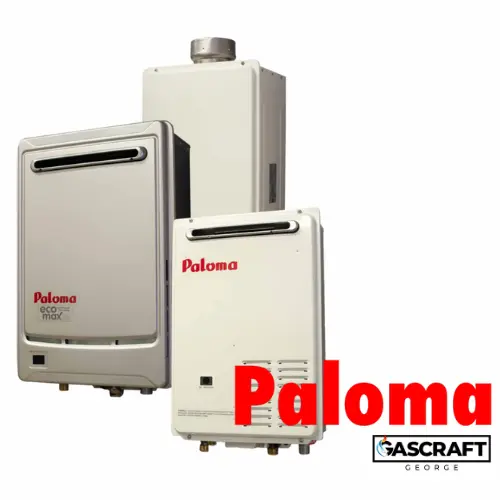
Paloma, Rinnai, Dewhot and Cadac gas geysers installed in George

Gas Geyser Comparison at a Glance

Here are all five models side by side. Prices are supply-and-install guidelines for George — the unit price is fixed, the installation portion moves with your plumbing layout and gas line distance.

Comparison of Paloma 20L, Rinnai 20L, Dewhot 16L CT, Cadac 16L Ecoflow and Cadac 12L Ecoflow gas geysers
FeaturePaloma 20LRinnai 20LDewhot 16L CTCadac 16L EcoflowCadac 12L Ecoflow
RolePremium whole-housePremium whole-houseMid-market workhorseCompact entryEntry-level
Capacity20L20L16L16L12L
PowerElectricityElectricityBatteryBatteryBattery
Mixer tapsYesYesYesLimited with low pressureLimited with low pressure
Preheated (solar) waterYesYesNoNoNo
Low-flow startNoNoNoYesYes
Weather cover neededNoNoYesYesYes
Unit priceR14,000R13,500R8,500R5,700R4,500
InstallationR8,000R8,000From R6,500From R6,500From R6,500
From, supplied & installedR22,000R21,500R15,000R12,200R11,000
Extras not includedCylinders, cageCylinders, cageCylinders, cage, weather coverCylinders, cage, cover, flue where requiredCylinders, cage, cover, flue where required
Best forLarge homes, estates, solarFamily and estate homesStandard homes, replacementsFlats, granny flats, low pressureGranny flats, small units
Full detailsPaloma 20LRinnai 20LDewhot 16L CTCadac 16L EcoflowCadac 12L Ecoflow

Best Gas Geyser for a Large Family Home

A 20L unit — either the Paloma 20L from R22,000 supplied and installed or the Rinnai 20L from R21,500. Both run on electricity, both handle mixer taps properly, and both can supply more than one hot outlet at the same time.

The 20L figure is litres per minute at a given temperature rise, and it is what separates a geyser that copes with a busy morning from one that does not. Two showers running, or a shower while the kitchen tap is going, needs the extra capacity. A 16L unit in that house will hold temperature until the second tap opens and then hand you the classic hot-then-cold complaint.

Both units need a weatherproof plug point near the geyser. That is worth knowing before you plan the position — an electrician visit sometimes forms part of the quote. The upside of electric ignition is stability: no batteries to go flat, and consistent firing under changing flow.

Choose the Paloma 20L or the Rinnai 20L for premium whole-house hot water. Both hold a set temperature under mixer taps and neither needs a weather cover, which matters on exposed coastal walls.

Choose the Rinnai 20L is R500 apart from the Paloma on the installed price. Their quality, performance and pricing are so similar that there is no clear winner, and GasCraft George is comfortable recommending either.

Best Gas Geyser for a Standard Home

The Dewhot 16L Constant Temperature, from R15,000 supplied and installed. It is the sweet spot between performance and price, and it is the unit we fit most often in George. Cylinders, cage and weather cover are extra.

Constant temperature means the unit modulates to hold the temperature you set rather than swinging with flow, which is why it works properly with mixer taps. For a standard home where one hot outlet runs at a time — the shower in the morning, dishes in the evening — it does everything a 20L unit does at roughly half the installed cost.

Its second advantage is batteries. Load shedding does not touch it. The trade-offs are honest: it needs a weather cover, because Garden Route rain and coastal moisture destroy the control board and wiring loom, and it cannot take preheated water from a solar system. Full detail on the Dewhot 16L page.

Best Gas Geyser for a Flat or Granny Flat

The Cadac 16L Ecoflow, from R12,200 supplied and installed. Its low-flow start is the reason — it fires on water pressure that other units simply ignore, which is exactly the problem in flats, granny flats and older properties on weak municipal pressure.

For a one-bathroom flat, a granny flat behind the main house or a rental unit, it does the job at the lowest sensible entry price. Landlords like it because it is cheap to install and battery ignition means no plug point and no load shedding complaints from tenants.

Being honest about the limits: it is limited with mixer taps where pressure is low, it needs a weather cover, it cannot take preheated solar water, and it is not a whole-house unit for a family home. We will not sell you one for a four-bedroom house. See the Cadac 16L page and the flats and granny flats page.

Best Gas Geyser for Solar Homes

Paloma 20L or Rinnai 20L, fitted inline. They are the only two of the four that can accept preheated water. The Dewhot and Cadac cannot — that is not a preference, it is a hard limitation of those units.

Solar homes in George have one recurring complaint: cold mornings. The panels do their job from mid-morning onwards, but after a cold night with a few overcast days behind it, the tank has nothing to give at 6am. An inline gas geyser sits after the solar tank and only fires when the water arriving at it is below your set temperature.

That means on a good day the gas barely runs at all — you keep your solar savings — and on a bad morning you still get a hot shower. The setup is explained properly on the inline gas geyser for solar homes page.

Electricity vs Battery — What’s the Difference?

It is about how the burner ignites, not how the water is heated — every one of these units heats with gas. Electric ignition is more stable but needs a plug point. Battery ignition works through load shedding but the batteries need replacing.

Electric ignition — Paloma, Rinnai

  • More stable firing, especially under changing flow
  • Needs a weatherproof plug point near the geyser
  • Will not fire during a total power outage without backup
  • Nothing to replace — no batteries to go flat mid-winter
  • No weather cover required on either unit

Battery ignition — Dewhot, Cadac

  • Works right through load shedding
  • No electrician and no plug point needed
  • Batteries go flat — the most common cause of “it stopped clicking”
  • Weather cover required to protect the board and loom
  • Cannot accept preheated water from solar

If your home already has an inverter, electric ignition stops being a load shedding concern at all and the Paloma or Rinnai becomes the easy choice. If it does not, and outages irritate you more than anything else, a battery unit removes the problem entirely.

Still Not Sure? Get an Assessment

we will come out, check your water pressure, look at your plumbing layout and gas line run, ask what your household actually does with hot water, and recommend one model. No obligation and no pressure to take the expensive one.

Very knowledgeable in gas and water
Google review
Safe and compliant LP gas guidance
Google review
Professional service and good quality hardware
Google review

Ready to go ahead? Everything about the install itself — what is included, how long it takes and what the COC covers — is on the gas geyser installations page. More questions are answered on the FAQ page.

Gas Geyser Buying Questions

For a family home with more than one bathroom in regular use, a 20L unit — Paloma from R22,000 supplied and installed or Rinnai from R21,500. Both handle mixer taps and more than one hot outlet at a time. For a standard home where one hot outlet runs at a time, the Dewhot 16L Constant Temperature from R15,000 supplied and installed is the sensible pick and it runs on batteries through load shedding.

Call 071 551 2108 for a free assessment

Tell us about your house and your hot water habits and we will tell you which of the five models fits — including when the cheapest one is the right answer.

Call 071 551 2108WhatsApp